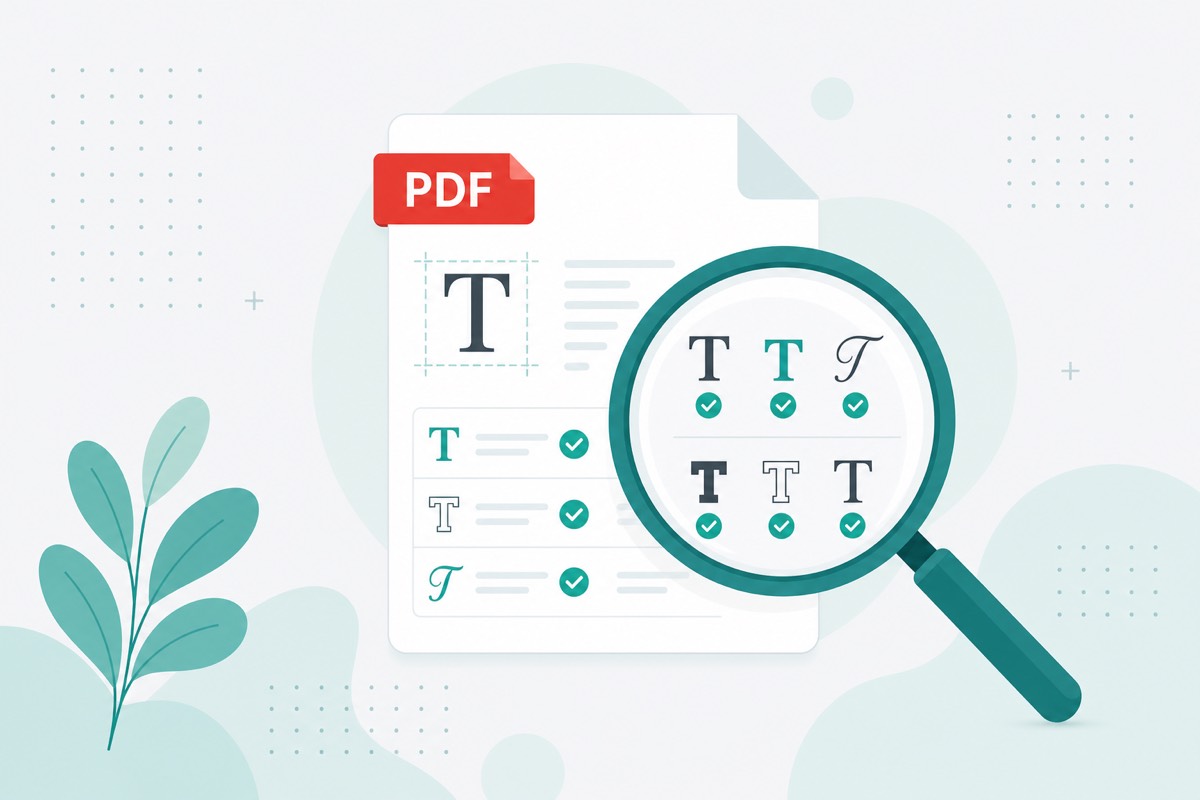
Why PDF Font Audits Matter
Website crawls catch fonts on live pages. They often miss the PDF your sales team emails: pitch decks, price lists, brand guidelines, and press kits. Those files embed typefaces. If the embedding rights do not match how you distribute the file, you can face the same licensing pain as an unlicensed webfont — just from a different channel.
What “Embedded Font” Means
When you export a PDF from InDesign, Illustrator, Word, or Figma, the app may subset and embed font programs inside the file so recipients see the designed typography. The PDF carries:
- Font family / PostScript names
- Subset glyphs (often only the characters you used)
- Sometimes license or vendor metadata (incomplete more often than not)
A renamed or subsetted font can still be a commercial product.
Manual Ways People Try to Check
- Acrobat / Preview font panels — list faces, not always clear licensing
- Design file archaeology — open the source
.indd/.figand hope it still exists - Ask the designer — works until freelancers rotate off the project
Manual checks do not scale across hundreds of PDFs in SharePoint or Drive.
A Practical PDF Font Audit Workflow
- Collect the PDFs that leave your company (sales, marketing, legal)
- Extract embedded font names from each file
- Match names against a commercial catalog (foundries, Monotype, Adobe, etc.)
- Flag families that typically need a desktop / document / embed license
- Keep proof of purchase next to the asset, or replace with an OFL alternative
What FontScanner Does for PDFs
FontScanner’s PDF upload scan extracts embedded text fonts from a document (up to 10 MB), matches them to our commercial catalog, and flags faces that may require a license — for 1 scan credit, same as a website crawl.
Use it when:
- A client asks “are our brand PDFs clean?”
- You inherited a folder of outdated catalogs
- Legal wants evidence before a foundry conversation
Image-only / scanned PDFs (no text fonts) will report no extractable faces — that is expected.
Checklist Before You Distribute a PDF
- List every embedded commercial family
- Confirm your license allows embedding / electronic document use
- Prefer OFL alternatives for public downloads when budget is tight
- Archive the invoice or EULA with the final PDF
- Re-scan after a brand refresh that changed typography
Conclusion
If it leaves your company as a PDF, treat its fonts like production assets. Auditing embedded typefaces is faster than answering a cease-and-desist about a forgotten brochure.